Tuesday, 7 May 2013

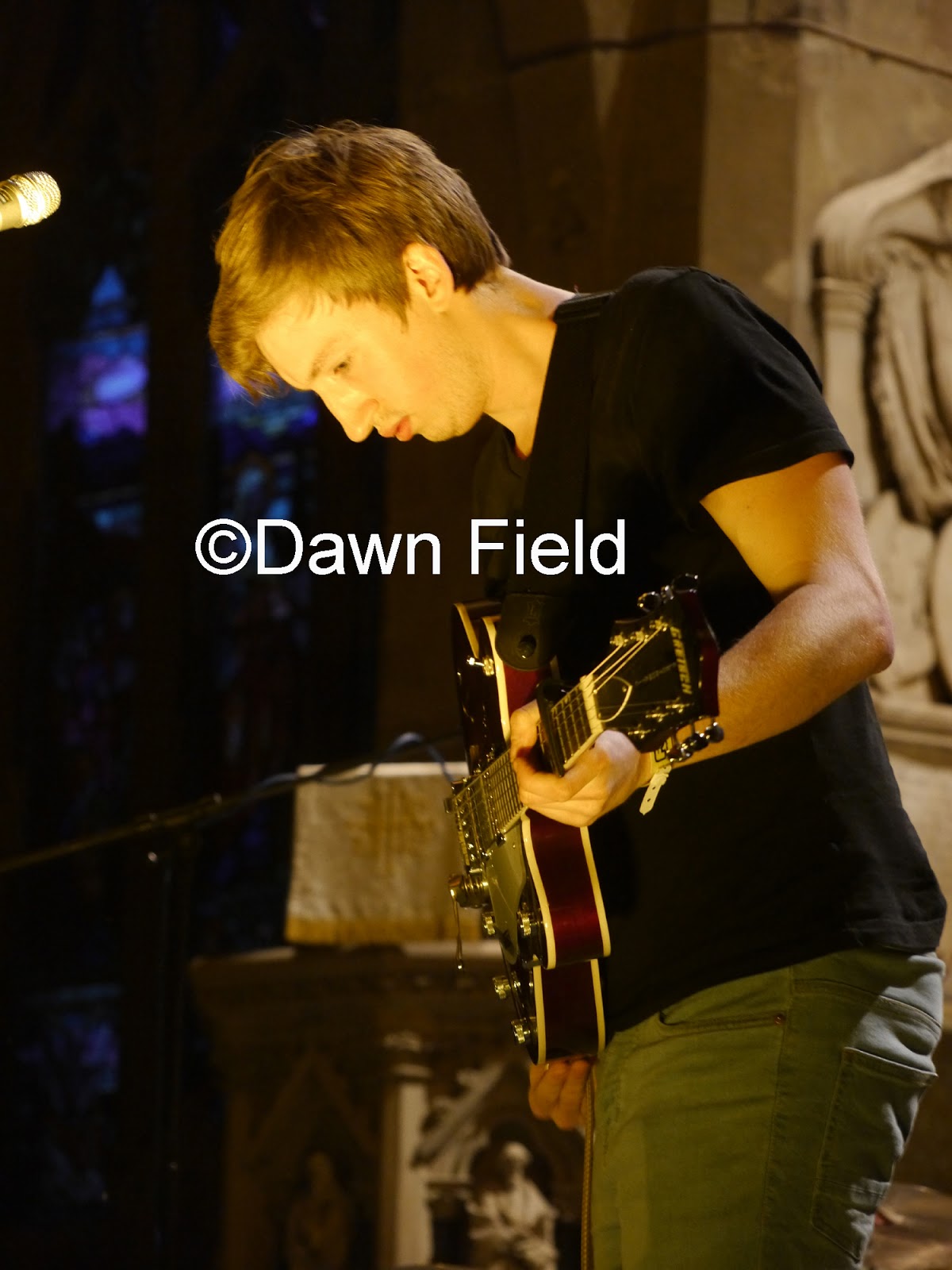
Focus Wales 26.5.2013 ( Pt 2 of 3 )


                    St Giles Parish Church


Delta Academy Choir


Kizzy Meriel Crawford

http://www.youtube.com/user/KizzKez


http://www.reverbnation.com/kizzymerielcrawford


Ingrid Gatin

http://www.ingridgatin.com/ 

http://music.cbc.ca/#/artists/ingrid-gatin

Ingrid Gatin | Facebook


Sam Airey

                                              http://soundcloud.com/samairey

http://www.youtube.com/watch?v=wJnql5LA8PY


Sam Airey | Facebook 


Camera

http://cameramusic.co.uk/

http://www.wrexhammusic.co.uk/camera-release-happiness/

http://www.myspace.com/cameratheband


Camera live at St. Giles Sessions | Facebook


Creative Futures week 7th.5. 2013 ( Pt 4 of 4 )


The first lecture that I had gone to at 11.30 was called


 Postgraduate student/ completing PHD. study.

Sue Liggett & Steve Keegan


A short synopsis of this lecture is how to go about and understanding how to apply for a Masters Degree and Ph.D. options. Both the speakers are part of Glyndwr University  - Sue is a senior lecturer in Fine Arts and Steve its principal lecturer in Postgraduate Studies.


content 10/10

 Very informative with both areas broken down and explained


delivery 10/10

Although the delivery was at a nice steady pace each person took turns telling us about each topic I did  become a little bogged down and confused in some areas. Personally I think that some of it may be due to University jargon so I would need somebody to explain it to help   my comprehension.

Interest 10/10

It was very interesting to hear a little insight into what you may want to do next within the University and gaining more education in your chosen area.


Mapping the journey of sycamore seed:
The making of bilingual animation "Pipkin"

Pamela Wyn Shannon with Linda McCarthy


Pamela has already lead a very colourful life as she's a professional musician and artist with 3 music CDs behind her and has performed in countries such as the UK, USA and Europe as well as  performed live on radio stations  in UK, Japan and various other European countries. She also has studied ceramic sculpture, artists books and recently studied Fibre Arts and puppetry and has recently had a baby. Originally born in America she told us about some of the jobs she had taken to support herself and has lived in accommodation such as  in-house museums as caretakers, looking after animals in a Scottish mansion to name a few.

Plant-dyed wool is used in her work; the dye is made from all natural plants such as walnut shells and onion skins.This is the media that she fell in love with. A fine needle is used to shape and sculpt her puppets, which is what the animation "Pipkin" is made from.

Pamela had a grant from the Arts Council Wales for "Pipkin". This project was originally going to be half drawing with a small amount of stop-motion, 3-D animation . It was at Glyndwr University that she got to experiment with her work and when she had finally decided on how the final piece of work would look, she realised that more technical help was needed. That was how the collaboration with Linda McCarthy came about. Linda is also an ex-student at the University and has made ceramic puppets and now has her own company .

We were then shown her finished animation entitled 'Pipkin' which is about the journey of a sycamore seed. It  is also available in Welsh -  'Hadcyn' . This came about because Pamela wanted to make the Welsh version in homage  to her ancestory connection. She is also learning to speak the Welsh language. The music that accompanies Pipkin is performed by Pamela and she also went through the process of learning how to sing the same song but in Welsh for the bilingual version.

We had a rundown of some of the processes behind the making and how she learned so much throughout the production and her collaboration with Linda McCarthy. At the end of the lecture there was an opportunity of a questions and answer session.


delivery  10 /10 

I enjoyed the lecture. The way in which it was delivered made me feel like I was sat in  her lounge catching up with somebody I haven't seen for a while. She came across so relaxed and at home talking to us that I was actually disappointed when the talk had ended.

content   10/10
interest   10/10

So much was covered about the production, methods, collaboration and Pamela's life journey.I didn't feel bombarded by technical jargon and was able to follow and learn quite a lot. It's not until the processes of what went on in making an animation do you realize how much time, effort and preparation has actually gone into what you're watching.


LINK BELOW

http://www.girlhenge.com/

http://hosted.verticalresponse.com/261306/8c319da34a/TEST/TEST/


Creative Futures week 6th. 5 .2013 ( Pt 3 of 4 )


Self-employed: the basics

Andy Gardner

Andy is Self employed but Works for tax office in revenue HMRC, his role is to help new businesses get it right the 1st time. In all fairness to  Andy he told us that we could ring him anytime for advice and left his number with us.If he wasn't available we could ask for Business education support team.

We started off with the basics of understanding when the tax year starts and ends. This year if you are self-employed your forms would have to be dated "Tax yrs- 6 April 2013 to 5 April 2014"  - complete the forms for this year at 2015. ALWAYS working a year behind"

You are categorised as being self-If employed, if you are actively marketing your business. This is also identified as having something to sell and either having a customer for your goods or services. If this is the case you should register online or alternatively you can do it by phone. Once this is in place you are considered registered, as for  National Insurance. You now have to make a contribution so make sure you KEEP A NOTE OF YOUR NUMBER.

Identifying Class and Pay

Class 2

self-employed

Class 3

voluntary

Initially you don't pay any tax until after you have earned £148 per week (I need to check this).  Self employed must be at class 2 and the flat rate of 2.65 a week and goes up in the new tax year. Payable in arrears and payments fluctuate and self employment pay ON A SUNDAY!

You get 5 benefits, however in the booklet it states you cannot get job seekers allowance.

Class4

is payments on profits!!! In 1 year if it goes above £7605 you will pay tax on the extra. You need private pensions if no National Insurance is being paid but you will be doing this if you are paying class 2 stamp.

Records.

importantly : You must keep records as this is proof and this is entirely up to you as to how you do it, you may have your own method or adopt somebody else's.

below are some simple examples:

1.  Set up your own systems to keep your records- you can keep a diary- money in and money out. Keep capital expenses separate eg camera etc. is a cost as it's a tool for your job.

2. Maintain those records. Keep up to date,You could pay an accountant to do this but you will need to pay them. This can obviously have its pros and cons.

3. Keep records for 6 years This is because you may need an audit! where the tax office check your records and you are legally obliged to keep records and you cannot stop them looking at them

Tax office needs to know:

1. Turn over = money in

2. LESS allowable expenses

3. Less capital expenses. Day to day this leads to taxable profit.

Take a wage out from the profits (need to check this) these are personal expenses!!! Only need to keep business expense receipts. Non allowable expenses =  food (you can get allowance for meals if u r away on a job) but only clothing for business eg uniform ( logo of ur business on clothing). 
Training is not an allowable expense but enhancement of knowledge training is. Working from home is allowable expense but you need to research how you put this into your expense claims. You can put any receipt lost in your records but not too often as the tax office will suspect you are fiddling your expenses and check even more into your accounts.
Mileage for car- deduct as allowable 45p per mile for 1st 10000 miles 

Timeline Example= 1 May 2013 to 5/4/14 and then get letter at -April 2014 paper returns your allowed 7 months to fill it in- you can get penalty if not on time. Online = 3? months to fill out but better done ASAP. Profit is taxed but you get a tax free allowance £ 8105 allowance at the mo.( this means everyone is allowed to earn this amount before the tax office takes tax off you)  and if you get more than that you pay 20% on the rest Going up to 9000? Next year Budget for your tax bill. Put some money away in an account or set up a budget payment account with the revenue office. Online you can get a calculation as to how much it will be!  This works with a partnership as well. "Limited Co." is not own business  - you are an employee!  

Webinars can be accessed on the web to get info etc Stock = cost of sales

interest  9/10   content  10/10

Somehow considering the topic I found it very interesting! I wasn't bombarded with jargon and complicated ways of understanding. So much content was talked about and broken down and it was really good to have a handout that we could take away from this lecture and be able to over periods of time, be able to read, look over it and understand to some further degree.

delivery  10/10

For this type of lecture that we were sat listening to, initially the words  tax, customs and revenue may make some people want to fall asleep already! To me Andy came across as kind of old school - he captivated me right from the beginning. His life story was incorporated into telling us all about HMRC and he was serious yet witty and managed to get the message across. When Andy talked I couldn't help but visualise especially when he referred to his father as "my old man".

The only bad point to this lecture was that for me his voice was too loud. I understand why he was loud as he needed to project his voice, but noisy environments, even talking, is difficult for me to handle occasionally. If I hadn't have been so captivated by him I would have found this lecture too much.


Volunteering and Careers within Charities

 by Catherine Stephens 


Welsh Council for Voluntary Action


Catherine manages the Voluntary Internship program where she works with Third Sector organisations across Wales. Previously she worked for the National Museum of Wales in Cardiff.

so what are some other benefits?

develops your confidence
increases your own skills and confidence

She advised:

Always make sure that you  include what you do, if you have an internship, on your CV.
Firstly to be accepted you need to complete their application forms and give them your CV they then pass it on to possible placements.

Advice for when you are on your placement:

Asking questions is a good way to learn try to network
Share any new ideas that might have the may be beneficial

It is important to find a mentor who you can go to. The mentor can check on you to make sure that you understand what is needed. 

Where possible, try to agree a work plan or write your own brief - this is so that you know what is expected of you, maybe even what you are going to do.
Most importantly don't forget to ask for a reference before you leave the placement or organisation.

There are approximately 33,000 organisations in Wales which house lots of opportunities for you, especially if you need more experiences on your CV. They will help your work possibilities and by helping charities this is a good way of building networks for yourself. Most placements are short term structured placements, part time so you could mostly only work 1-2 days a week for 3 months. Sometimes it is possible to do longer within organisations. They are also looking for  commitment and flexibility in individuals. 

There is a wide range of placements and where possible they could tailor your volunteering into helping utilise your own skills.Catherine has worked for 100+ charities in the last 18 months. Internship allows individuals to test out many different careers and this is because there is no long term commitment. If for any reason you don't like it there is an option that you can can leave. An example = Internship creating websites - if you decide to go freelance with your photography it can be difficult to establish your name and volunteering helps you to do that.

Links below

www.volunteering-wales
www.wcva.org.uk 
www.facebook.com/explorementro‎

interest   10/10  content  10/10

This was a really interesting  talk that had real promise as to what experiences and opportunities can  be gained by volunteering. It can help practical and personal skills, self-confidence etc. I have myself gained with being in a volunteering environment. Although the talk didn't last that long I felt this content was vast.

 delivery 6/10

I found the delivery very flat  as the speaker to me seemed to have no passion in selling the idea to us. This I know seems a little bit harsh and I can empathise how daunting it can be talking in front of a group of people as I have had some experiences of this myself. the speaker didn't seem to connect with the audience. This was an excellent idea - so much opportunity to be gained on both sides.


"Mirror mirror on the wall"

finding evidence of the CVS and applications


Andrea Hilditch


Andrea has worked with students at Glyndwr for approximately 7 years, within a role she enjoys, helping people to see what they can actually offer employers.The title gives a subtle hint into self reflection into past history of mistakes, barriers, challenges etc and the present situation and how to get to the future. Also it goes into how we portray ourselves as well as who we are behind the mask.
One of Andrea's challenges was to convince us that we had more to offer the employer than we actually thought we had.

The phrase of "Mirror mirror" went into more depth. When we create our CV we also create a clear image of ourselves and we ask an employer to judge how appealing we are. "Who's the fairest or who's the best person for the job"? This could reflect on your personal energy and  interests.

How do you get your CV right?

Some are said to have too much information while others are said to have too little, it's about finding the in-between balance.

Think about who you have also collaborated with on projects in and out of University. Employers also like evidence that backs up your statements.
The activities of self reflection was then started, both individual and in group work.
Positive and pro-active words were something else that was touched upon - using the words "I just" or "I only" for example or the words "Had the opportunity to" or "Had the chance to" as they may come across as meaning that you just "tried" the tasks. Try not to use words or phrases that can be damaging.

Link below

http://www.studentsguild.glyndwr.ac.uk/StudentServices/CareersJobshop/


Photographic career development

Adam Lee

Adam is a semi-professional photographer who is based in Liverpool, but his work takes him  all over the place. He does various types of work such as commercial, participatory photography, and different kinds of collaborative work and also his own personal work. Adam also describes himself as an "emerging artist".

One of his collaborations was with a community arts project that was run by Mark Baker.       He was commissioned to document the project, art work and the people involved. Some
of his commercial work has been as a wedding photographer. The documentary approach can  also be used at weddings as it captures those reactions and moments. A lot of Adam's work is also working with people who have disabilities - as he is a support worker at the John Moore's University and he's done this for the last 10 years. He also does a lot of work for many different  organisations for the disabled, such as DADA (disabled and deaf arts) and The Brothers of Charity.

Adam stresses that although he has done voluntary work sometimes that has led onto paid work. Throughout the talk, various images that he had taken were shown to us.

content   7/10  interest   8/10

I did actually find it interesting the bits that I had grasped, particularly about the windows of opportunity that can arise from chance meetings and voluntary work.

delivery   5/10

After about 15 min I had started to switch off due to the fact that he was talking too fast for me to take everything in, and it had started to become a "drone" and my attention span was shut down.
I understand that within the time period he had a lot to tell and show us, but sometimes it  just felt to me that some things will be repeated due to the speed of delivery.


Creative Futures week 5th.5. 2013 (Pt 2 of 4)


Marketing yourself
Denise Chilton

I had initially last year sat in on both of the next two lectures by Denise and I just presumed that this year the talk was about something different. Despite the same content being delivered it is always good to have a refresher.

Denise's  background is such that at 16 she left school and went to work in financial services. She's quoted to have said about herself that 10 years ago she had a midlife crisis and felt the need for change. This started when she purchased an espresso machine and started to call round festivals selling coffee from the back of her van. As everyone knows - you start out  and make a few mistakes along the way and she was no exception. Despite this, two years later she won the small business award. Denise is also a business coach which was elaborated more on in the second lecture and is featured below this one - entitled motivating yourself to get what you really want.

The lecture was broken up into bite-size chunks of information. We were reminded that we are a brand ourselves and no matter who we come across, people will always take away that first impression with them. As the saying goes - that we are all reminded of - "you never get a second chance to make a first impression" and in business there is never a truer word spoken. Denise likes to incorporate activities within her lectures so our first task was to write down what our first impression of her were.

We were told the difference between what external and internal branding was. Basically the first is how you market yourself to the people and the second is how you think about yourself. We were reminded that like in life we tend to take our values into business with us. These can be the building blocks that represent what matters to us and how they affect what we do and how we do it. Obviously like us they will change and evolve over time. 

Below is another activity which we took part in about "values":


Our next activity was a group one - we had to collaborate and think about what our unique selling point would be and what makes us different.

We were also asked to examine what our percentages would be in the importance of communication by the means of words, tone and body language. The last two tips that were shared were about building rapport, that relies upon many different aspects and personal branding-  where we need to be ourselves.

interest 10/10
content  9/10

Very informative  - each area was broken down into points which made us think about both sides of the coin, such as - what others think of us may not be the way we our portraying ourselves in the business. Lots of food for thought.

delivery 7/10

There was some aspects of the delivery that I didn't like, which was the group activities and visualising. I did however understand the principles behind them. I guess it self reflection this always brings up areas which I myself should work on to improve. I enjoyed the way in which it was delivered in a non-heavy but light and manageable learning way.


Motivating yourself to get what you really want
Denise Chilton


For this second lecture by Denise Chilton we were asked the questions - "What do you really want? What would your life be like if you woke up tomorrow and it was just the way you wanted to be"? The other question to analyse was  "What would it be like to set goals that where thrilling and actually achieve them"?

We were introduced to Maslow's Pyramid of Hierarchy of Needs - this model was first developed in the 1940s and 50s and remains just as relevant to us today. The Pyramid below shows us motivation which can lead us to achieve our goals.


Like the previous lecture we had activities to fulfill. The first one was - the positive list  - to write down all the things that motivated us. Next came the negative list  - write down all the things that don't motivate us. Once this was completed we looked at 'the wheel of life' handout which is shown below. 


Once we had filled the wheel in, we had to select an area that we would like to change. We then had to find a partner to discuss this with and then change roles. Within the self-analysis we should ask ourselves questions such as "When are we most alive and at our very best?  What are we doing and who with?" and finally "what surrounding are we in?"

Next we were introduced to SMARTIE goals.


This translates into:

Specific and positive
Measurable and meaningful
Achievable
Realistic and right for you
Timed, targeted and thrilling
I as in 'my'
Exciting
Sensational

The lecture was finished with positivity in the forefront of our minds and ways in which we could discover potential and live the life we really want to. The steps were "To write your goals down when you can see them, creative vision boards, don't be overwhelmed and set too many goals". Most importantly - "Never give up on your dream, so many people tend to give up when one step away from success".

delivery  7/10 
content  10/10

Just like the previous lecture with Denise I could understand the principles behind the exercises but didn't necessarily want to partake in them. The lecture again was a nice mixture, not too overpowering. It also had a direct approach to making you analyse yourself without even thinking what you are doing. It could be seen as a powerful experience into analysing where you are in life and what I want to go.

interest  9/10

Denise showed us and gave us the tools and knowledge of self empowerment as to be right at the top of Maslow's Pyramid of self-actualisation. I found the psychology behind this interesting as previously I had been on other lectures which uses the same principle. It seems a lightweight method to introduce people to self-analysis and maybe not realise that they are delving into the unconscious mind.

links below


http://www.denisechilton.co.uk/


Denise Chilton Ltd - Liverpool, United Kingdom - Company | Facebook


Continuing in the art world

Jake Attree


 We were told briefly about an iconic book 1964 named 'Private View' which is a collection of Lord Snowdon's photographs. 57 images can be seen on the link below


http://www.npg.org.uk/collections/search/set.php?set=269&wPage=0


We then had a trip back into history and were introduced to Helen Lessore who was dealer at the Beaux Art gallery, Burton Palace,  London.Other names such as John Lessore, Frank Auerbach, Erica Brausen and many more were named. Names and information a little "lost in transit" for me.

The question was asked: How do you get into a gallery?

Some of the answers are -


Go to art fairs- particular good ones are Islington, Battersea and Royal College
Write down the names of 12 galleries and venues that might realistically take your work
Make a visual CD of your work - be professional -include dates and dimensions etc
Price pitch - don't be too modest
Send work to galleries - if it is sent back to you don't be too disheartened
Apply for bursary awards
Apply for shows - this could be less hopeful if you're expecting nothing therefore anything good is a bonus.
Need to be self financing and sell work to become independent
Have a body of work and wait for the right time and opportunity

If you are real artist you are controlled by the creativity and you become depressed/ill if you aren't.


Picasso said that he made paintings his creativity told him to make. It has also been said that Van Gogh was too overwhelmed by his creativity.

you need to


Build an audience

Aquire a studio space
Put visitors booking your studio in order to get lists of people to send invitations to
Get on the mailing list of galleries -  go to previews and introduce yourself
Publicity - don't just go for the cheapest option for printing leaflets publications etc. -  get the best version you can afford.


Link below


Creative Futures week-4th 3.2013 (Pt 1 of 4 )


Creative Futures week had come around again, unfortunately this year I was unable to make the 10 o'clock opening address due to a prior engagement. That morning I had to go to the framers in the Plassey and see Phil to pick up my work which I had to then take to the Willow Gallery in Oswestry,  ready for my first exhibition.I  was able to make it back for the 1:30 lecture which seemed relevant to where I had been that morning!


All that you need to know about approaching galleries and craft shops.

Tabitha Tansey


  1. Tabitha is an ex-Glyndwr student who is successful in selling her product in the UK. She is based in Shropshire and creates glasswork using a technique called Pate de Verre  -this is an ancient method which translates to glass paste. She then talked briefly about her time as a student.

good points

One of the first points was that sometimes it appears that due to commissions taken from artists when displaying their work in galleries, that the gallery actually makes more money than the exhibitor. We looked a little deeper into this statement; in actual fact benefits from exhibiting in a gallery are;1) they use their database to promote you and your work 2) they have overheads of lighting and heating and 3)they need to pay their staff- but they are selling on your behalf as well. The other good point with collaborating with the gallery could be that some galleries may even buy your work 4) some galleries when promoting new artists may sell several works sale or return.

bad points

1) Transportation of your work to galleries can be costly especially if some galleries are further away from your local area. 2) Sometimes you have to learn within this area to be hard skinned because some galleries may not entertain your work for a short time because they don't think that your product will sell - which once you get past the feeling of rejection - rationally this comment is saving you time and money. 3) Some galleries may get you to sign a contract which states that you are not allowed to sell your work within the same area such as town or county. 4) The other issue - pricing your merchandise - as some galleries charge you commissions having your work on display. 

There are many other aspects that may be taken into consideration such as qualifications -some galleries may not take your work because you have not got a degree and sometimes it might be because you have a degree but are studying for an MA. Sometimes this rejection maybe due to the fact that students may not have the workshop of their own and heavily rely on the universities. Therefore quickness in replication and demand in the galleries for work may not be fulfilled. The talk went on to cover how to approach galleries and such events as tradeshows. The importance of signing a contract with the gallery was another aspect as unfortunately some people have been in the situation of galleries going bankrupt and their exhibits not been returned to them. Sometimes there is the downfall of some of your work might be lost, damaged or even stolen and insurance is something else to think about to make sure that you're not out-of-pocket if anything like this should occur.

Lastly there was an opportunity for a questions and answer session with Tabitha.


See link below

http://www.tabithatansey.co.uk/


Interest  10/10

I found this interesting and enjoyed it due to the fact that there is so much more that goes on behind the scenes when actually being in the gallery viewing work, then you had imagined.


Content  8/10


Initially this was aimed at fine art students etc, but being a photographer there were certain aspects where very useful and gave me food for thought, that I hadn't even considered.


Delivery  10/10


For me personally it was delivered in layman's terms which was great. I was able to follow and take in information without being too overwhelmed. It was very informative and broke up each aspect up into categories. Tabitha's delivery came across as  being passionate about the work, very professional, approachable and willing to help anybody get on the right track.


Promotional stalls

There were many information stalls present for the four days which were located in the main reception area and in the Catrin Finch Centre. 


WCVA - 

AVOW -  

The two stalls above we did speak to the volunteers

British Red Cross
Young Dragon Territorial Army
Girl Guides
Hope House
Dynamic- a centre for children and young adults with disabilities
Alzheimer's Society
Breakthrough Foundation,
Nightingale House
Leonard Cheshire Homes
Gwirvol about youth volunteering Wrexham Sports and Fitness Team
Age concern, FOVI ( Mental health life coaching) tenovus
North East Wales Wildlife
Save the Family Vintage Mary Dei shop - selling clothes for charity
A charity that was donating to African AIDS 
Europe Direct


to find out more please visit the various websites